








Optimizing Accuracy, Efficiency, and Throughput for Hardware Packaging Operations
1. Introduction to Fastener Kitting & Packaging Challenges
In modern manufacturing, assembly, and retail supply chains, the demand for mixed hardware kits—commonly referred to as fastener kits—has grown exponentially. Whether it is an e-commerce flat-pack furniture kit, an automotive assembly package, or specialized construction assortments, consumers and industrial clients expect precise counts of screws, nuts, bolts, washers, and anchors bundled neatly into a single, durable poly bag. However, fulfilling these mixed assortments presents significant operational bottlenecks when managed manually.
Manual kitting is notoriously labor-intensive, error-prone, and financially inefficient. Operators must manually count individual pieces from separate bins, risking frequent miscounts that lead to customer dissatisfaction, expensive returns, and eroded brand reputation. To scale production and eliminate these vulnerabilities, forward-thinking manufacturers are turning toward specialized automation: Automatic Counting and Bagging Systems. This comprehensive guide details how these automated solutions function, the primary technologies powering them, and how to select the ideal machinery configuration for your business.
2. What is an Automatic Counting and Bagging System?
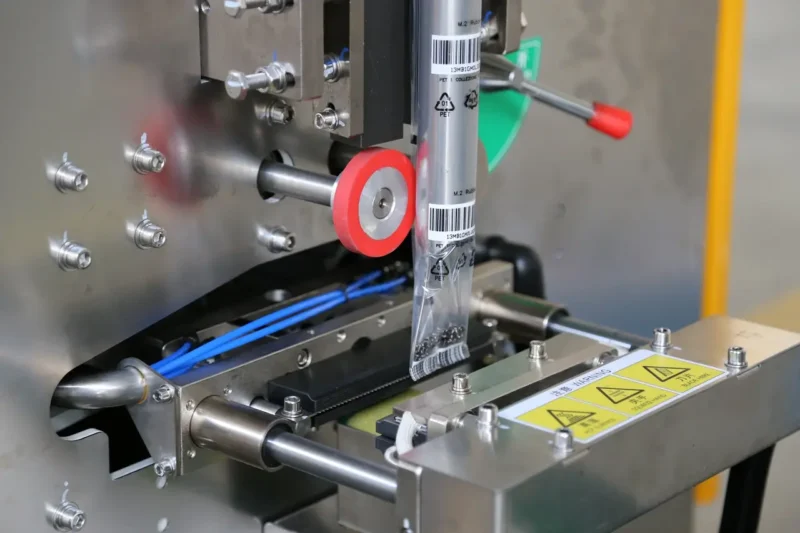
An automatic counting and bagging system is an integrated packaging line designed to automatically sort, feed, accurately count, aggregate, and package distinct hardware components into a single poly bag. Instead of relying on human hands to count components, these industrial systems utilize physics-based and optical sorting mechanisms to prepare kits seamlessly. The typical automated workflow consists of the following synchronized stages:
- Feeding and Orientation: Bulk fasteners are loaded into hopper-feeders, which pass them into specialized orientation mechanisms, preparing them to enter the counting zone one by one.
- High-Speed Counting: As parts pass through a precise corridor, advanced sensors record the exact units against a pre-programmed target formula.
- Aggregation: Different parts from separate feeding modules drop into a centralized funnel or a collection conveyor, merging the components into a single mixed kit.
- Bagging, Sealing, and Dispensing: The gathered kit drops into a continuous form-fill-seal poly bag or a pre-opened bag on a roll. The system applies heat to seal the edges, cuts the bag, and dispenses the completed kit onto an outbound conveyor.
Key Industry Standard: Modern automated hardware bagging lines achieve counting accuracy rates exceeding 99.7% while increasing output speeds by 300% to 500% compared to traditional manual sorting teams.
3. Core Sorting Technologies: Vibratory Bowls vs. Optical Counters
At the heart of any hardware packaging machine is its counting and detection technology. Depending on the physical profile, weight, and variety of the fasteners being packed, manufacturers deploy different technologies to isolate and count parts:
Vibratory Bowl Feeders
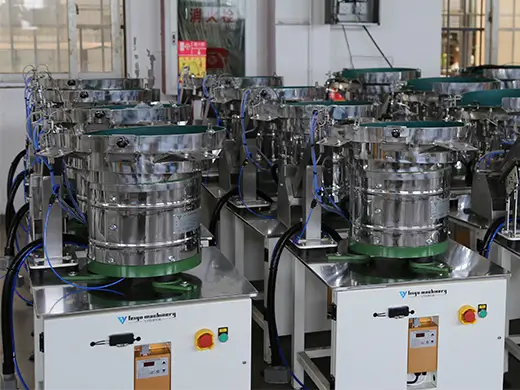
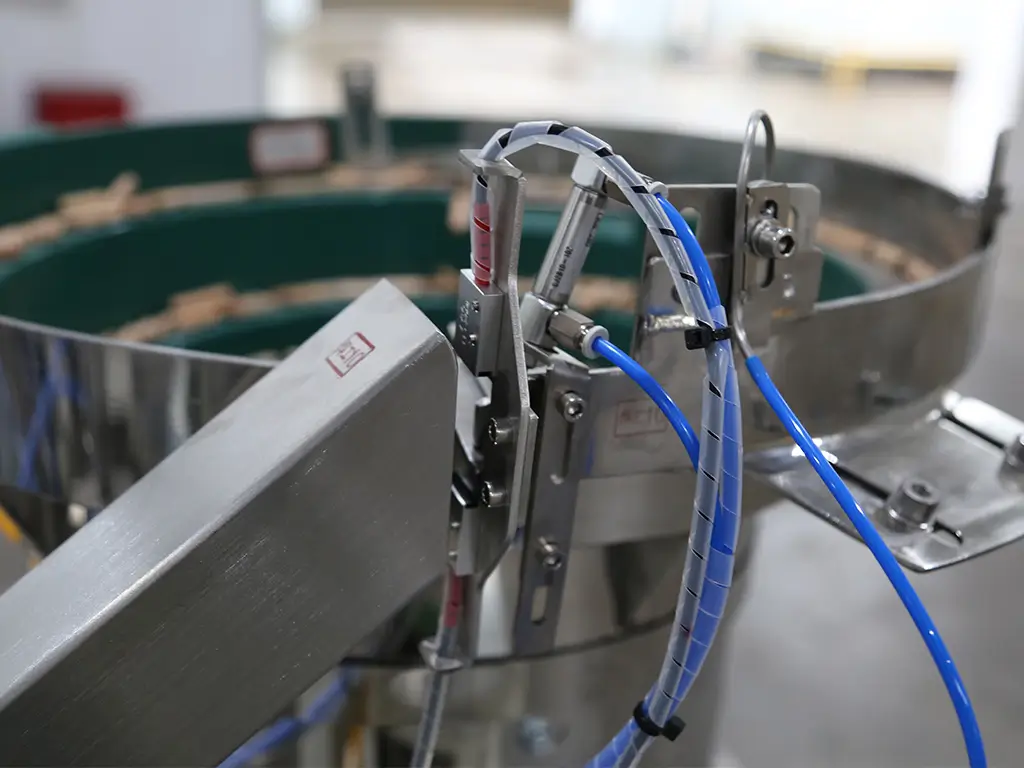
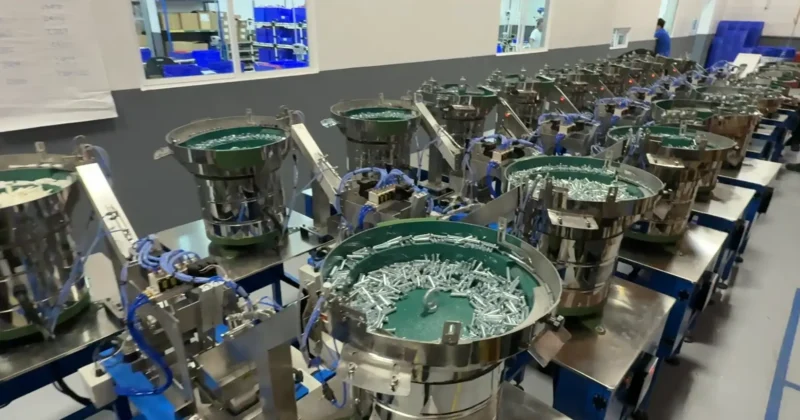
Vibratory bowl feeders are the backbone of hardware automation. Using precise electromagnetic vibrations, these bowls move bulk fasteners upward along a spiral track lining the inner wall of the bowl. Custom-engineered mechanical gates, wipers, and tooling cutouts along the track ensure that only perfectly oriented parts make it to the exit chute, while misaligned components fall back into the center of the bowl. As the isolated pieces slide down the discharge track, they pass through ultra-fast fiber-optic sensors that detect structural breaks in light, delivering a 100% accurate count to the main PLC controller.
Optical and Vision Counting Systems
For operations dealing with highly diverse parts or fragile components that shouldn’t be subjected to extensive vibration, optical matrix counters offer a powerful alternative. These systems feed fasteners along a flat, high-speed mini-conveyor belt or over a drop chute monitored by line-scan cameras and specialized machine vision software. The vision engine identifies the profile of every object in real-time, allowing it to count multiple overlapping parts simultaneously or filter out irregular debris and malformed parts before they enter the final bag.
4. Fully Automated Solutions: Multi-Bowl Hardware Bagging Machines
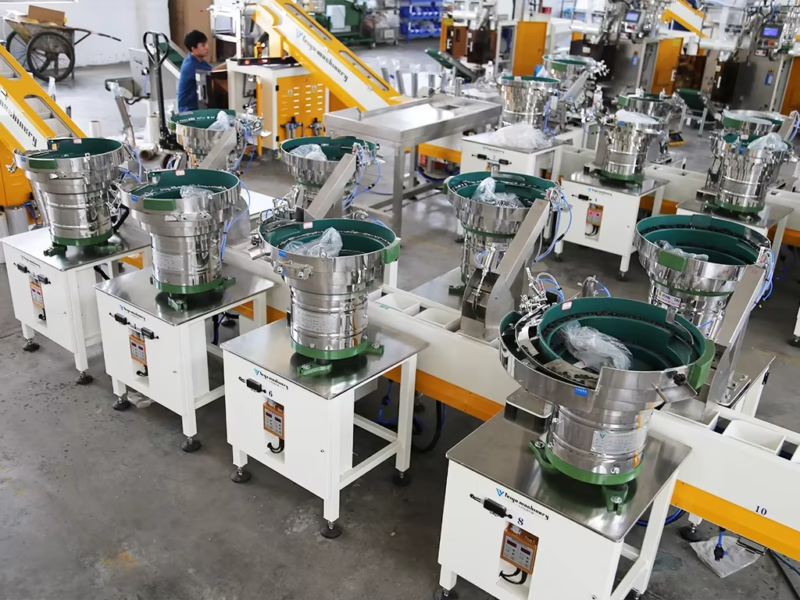
When high throughput and complete hands-free operation are required for fixed-recipe kits, multi-bowl automated hardware baggers represent the gold standard. A prime example of this setup includes systems built with separate vibrating stations synchronized to a single vertical form-fill-seal (VFFS) or side-pouch bagging unit.
Imagine a kit that requires exactly 4 wood screws, 4 hexagonal nuts, 4 flat washers, and 2 wall anchors. In a multi-bowl configuration, four separate vibratory bowl modules are positioned adjacent to a central collection funnel. Each bowl is dedicated to one component type. The PLC system controls each bowl independently, vibrating them simultaneously until their respective fiber-optic tracks register the exact count. Once all four modules satisfy their target counts, they release their batched components concurrently into the single waiting poly bag below. The bag is then instantly heat-sealed and severed, creating a complete mixed kit in seconds without any human intervention.
5. Semi-Automated Solutions: Kitting Conveyor Systems
While full automation is highly efficient, it requires dedicated setups optimized for specific high-volume parts. For custom assembly houses, third-party logistics (3PL) providers, or operations that handle highly variable, low-volume, or irregular kits, a Semi-Automated Kitting Conveyor System offers unmatched flexibility.
These systems feature a continuous, multi-station kitting conveyor (often equipped with structured buckets or dividers) flanked by human operator stations. Rather than manually counting out parts, operators simply grab handfuls of parts and place them directly into passing buckets, or the conveyor serves as an aggregation path where a few automated bowls drop standard items, and operators manually drop the odd, non-standard items (such as specialized brackets or manuals). The conveyor advances to an automated side-pouch bagger, where a pre-opened poly bag is automatically inflated via a built-in blower. The bucket tips its contents down a funnel into the open bag, which is immediately sealed and printed with relevant barcodes or tracking information.
6. Comparison Matrix: Selecting Your System
| System Type | Best Suited For | Pros | Cons |
| Multi-Bowl Fully Automated | High volume, stable kit configurations (e.g., standard furniture packs) | Maximum throughput, zero manual labor, exceptional accuracy | Higher initial capital investment, longer changeover times |
| Semi-Automated Kitting Conveyor | High variety, frequent kit changes, complex/oddly shaped parts | Maximum flexibility, low changeover cost, simple operation | Requires manual operators, lower peak throughput speeds |
| Optical Vision Bagging Lines | Ultra-precise requirements, mixed small components, scratch-sensitive parts | Recognizes defects, handles diverse geometries smoothly | Highly dependent on optical clarity and cleanliness |
7. Key Considerations When Investing in Fastener Bagging Automation
To ensure long-term ROI and operational compatibility, consider the following technical factors before choosing a machine line:
- Part Geometry and Variety: Document the dimensions, weights, and material properties of all components. Heavy bolts require heavy-duty polyurethane coated bowls to minimize noise and wear, while micro-screws require high-frequency micrometers.
- Changeover Versatility: If you change kit recipes multiple times per day, prioritize machines designed with quick-release bowls, adjustable track gates, and easily saveable software profiles on the HMI touch-screen panel.
- Bag Material and Styles: Determine if your market prefers standard clear polyethylene bags, pillow bags, hang-hole bags for retail displays, or pre-printed bags with company branding. Ensure the sealing bars match your chosen material thickness.
- Integration Capability: High-performance lines often require auxiliary systems such as inline thermal printers (for real-time printing of barcodes, lot codes, and logos), checkweighers (to double-check bag weight post-sealing), and outfeed conveyors.
8. How Feiyu Machinery Empowers Modern Fastener Packaging Automation
As a leading pioneer in the engineering and manufacturing of customized packaging hardware, Feiyu Machinery provides custom-tailored counting and bagging automation lines engineered to solve complex kitting challenges. Feiyu Machinery’s systems specialize in combining robust mechanical design with highly responsive PLC controls to bridge the gap between complex hardware configurations and high-speed efficiency.
Whether your application demands a dual-bowl system for basic screw-and-nut configurations or a highly sophisticated 10+ bowl integrated packaging matrix for comprehensive assembly kits, Feiyu Machinery designs bespoke solutions fitted with sound-dampening coatings, high-speed fiber-optic counting modules, and intelligent touchscreen interfaces. By focusing on durability, minimal maintenance, and intuitive operation, Feiyu Machinery helps businesses around the globe slash labor overhead, eliminate kitting errors, and elevate their production throughput to new competitive heights.
Ready to Transform Your Packaging Efficiency?
Embracing hardware kitting automation is the single most impactful operational improvement a fastener distributor or manufacturer can make. Visit https://feiyumachinery.com/ to speak with an automation engineer today, request an operational assessment, and find the perfect automated counting and bagging configuration tailored precisely to your production needs.