






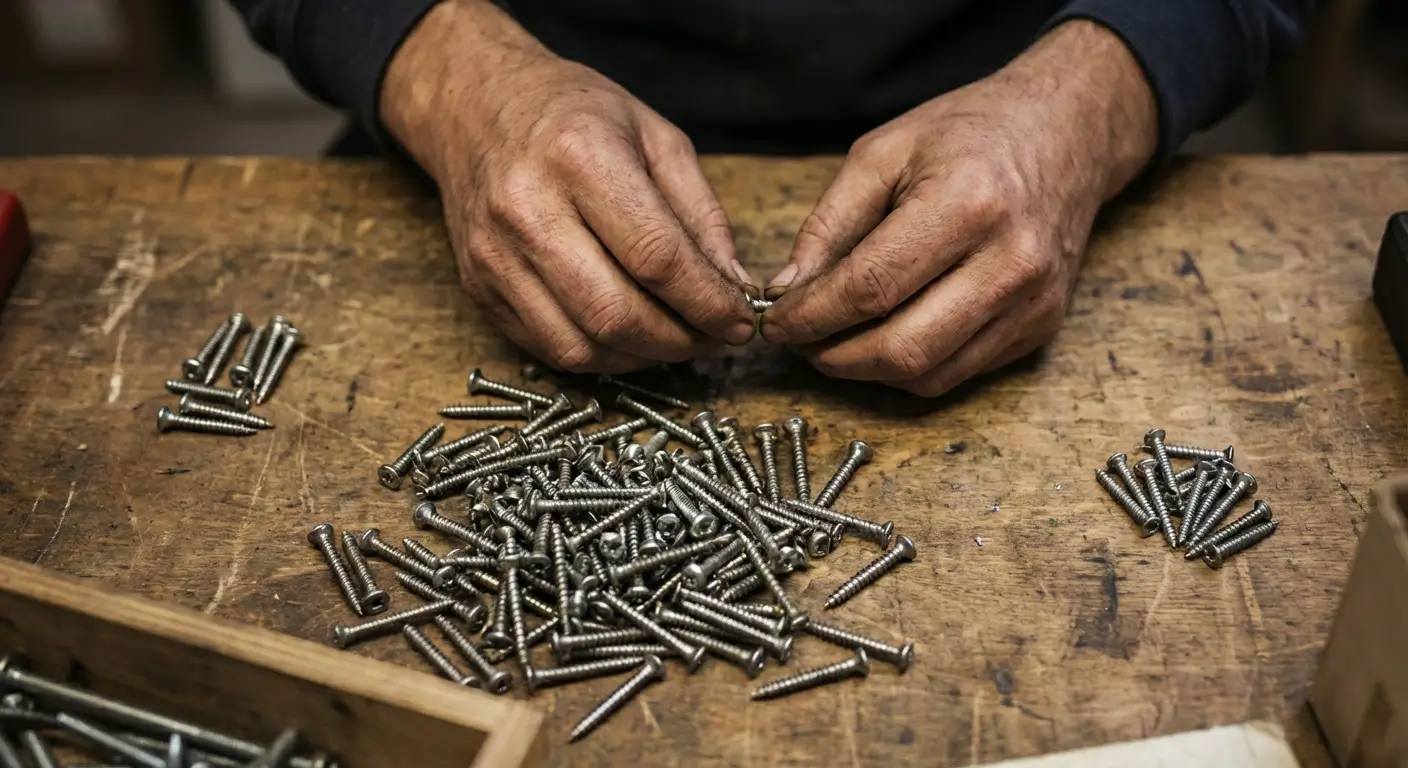
In many manufacturing operations, the final packing stage is often the bottleneck. Even if your production line runs efficiently, errors, delays, and inconsistencies frequently occur at the last step.
Common issues include:
- Miscounted screws, fasteners, or small hardware parts
- Rising labor costs for repetitive tasks
- Difficulty managing a large packing workforce
These challenges aren’t just minor inconveniences—they can reduce throughput, increase waste, and affect customer satisfaction. Understanding how automation works can help you make smarter decisions for your production line.
Four Limitations of Manual Packing
Manual packing can affect your operations in four key ways:
- Limited Efficiency
Human workers have natural speed limits. Fatigue can slow production, creating bottlenecks, especially during peak demand. - High Error Rates
Counting mistakes—over-packing, under-packing, or mixing parts—are common in repetitive tasks. Errors lead to material waste, costly returns, and damaged reputation. - Rising Labor Costs
Manual labor carries ongoing costs: wages, recruitment, training, and management overhead. These expenses tend to grow over time. - Management Complexity
Supervising a large team requires constant oversight and training, taking focus away from strategic process improvement.
How Automated Packaging Addresses These Challenges
Automated packaging isn’t just a replacement for human labor—it’s a tool to streamline your production and improve reliability.
Key capabilities include:
- High-precision counting with fiber optic or vision-based systems, reducing human error to near zero.
- Continuous operation at high speed, handling everything from bag/box forming to sealing.
- Versatility for screws, fasteners, small hardware, electronic components, and irregular parts.
These features allow you to maintain consistent quality and output while reducing labor dependency.

Practical Benefits for Your Business
Here’s what a well-implemented automated packaging system can achieve:
- Increase Throughput
A single machine can match or exceed the output of several manual workers, operating without breaks or fatigue. - Reduce Costs
While automation requires an initial investment, it significantly lowers ongoing labor and error-related expenses. - Ensure Packing Accuracy
Precision counting helps eliminate quantity errors, improving customer satisfaction and reducing returns. - Simplify Operations
Machines handle repetitive tasks, freeing your management team to focus on production planning, quality control, and innovation.
Next Steps for Manufacturers
If you’re considering automation:
- Evaluate your current packing process to identify error points and bottlenecks.
- Compare manual output and error rates with the potential throughput and accuracy of automated solutions.
- Start small with a machine suited for your most common product type, then expand as efficiency gains become clear.
For example, a small hardware manufacturer packing 10,000 screws daily may reduce errors from 3% to less than 0.1% using a screw packing machine. This not only saves labor but also strengthens customer trust.
Feiyu offers automated counting and packaging solutions that can be customized to your product size, type, and packaging requirements. Learning how these machines integrate into your workflow can help you make informed decisions about automation investment.